
By Mozzie | iQuitPorn.com
PIED recovery is fastest when you completely stop pornography, remove all artificial sexual stimulation, support your body with sleep and exercise, reintroduce real intimacy without pressure, and avoid relapsing. The timeline depends on how long and how heavily you used — but the things that speed it up are within your control.
Below: the fastest path to recovery, how to tell it’s working, whether behaviour change reverses it, how habits cause it, and whether exercise helps.
What’s the Fastest Way to Recover from PIED?
The fastest way to recover from PIED is complete abstinence from pornography combined with the lifestyle factors that support neurological healing — and the deliberate avoidance of the things that slow it down.
There is no shortcut that skips the fundamental process. PIED is a condition of neurological conditioning — your brain has been trained to respond to artificial stimulation, and recovery means retraining it to respond to real intimacy. That retraining takes time, and no pill, supplement, or technique eliminates the time entirely. But within that reality, some approaches are dramatically faster than others, and the difference between the fastest possible recovery and the slowest is enormous. Two men starting from the same place can have completely different recovery timelines based entirely on what they do.
Here is what actually accelerates PIED recovery, in order of importance.
Complete, total abstinence from pornography
This is non-negotiable and it is the single biggest factor by a wide margin. The brain cannot begin recalibrating toward natural stimuli while the artificial stimulus is still present, even occasionally. Every exposure reactivates the conditioned pathways and resets progress.
Men who abstain completely recover faster than men who reduce or occasionally relapse — not by a little, but by a lot. Half-measures do not produce half-speed recovery; they often produce no recovery at all. The man who watches once a week is not recovering at half the rate of the man who has stopped entirely. In many cases he is not recovering at all, because each exposure undoes the accumulated progress and resets the neurological clock.
This is the hardest truth in PIED recovery and the most important. If you take only one thing from this article, take this: complete abstinence is the foundation, and there is no version of fast recovery that does not start here.
Eliminating all artificial sexual stimulation, not just pornography
The fastest recovery comes from removing not just pornography but the broader habit of seeking artificial arousal. This includes erotic content of all kinds, excessive sexual fantasy, the use of suggestive social media as a substitute, and the constant low-level searching for stimulation that often accompanies the addiction.
Many men in PIED recovery make the mistake of cutting out pornography while continuing to feed the same neurological pattern through other channels — scrolling for suggestive images, engaging in heavy fantasy, seeking out arousing content that technically is not pornography. This keeps the conditioned pathways active and slows the recalibration. The brain does not distinguish sharply between pornography and other forms of artificial sexual stimulation; what matters is whether you are training it to respond to artificial cues or allowing it to reconnect to real ones. The more completely you remove the artificial stimulation, the faster the brain recalibrates.
Supporting the body’s recovery systems
Sleep, exercise, and nutrition all directly affect the speed of neurological recovery. These are not optional extras — they are accelerants.
The brain does its most significant repair work during deep sleep, which means poor sleep directly slows the neurological recovery that PIED requires. Exercise supports dopamine system recovery, improves circulation, and reduces the stress that suppresses sexual function. Good nutrition provides the raw materials — amino acids, healthy fats, micronutrients — that the brain needs for neurological repair.
Neglecting these does not stop recovery, but it slows it, sometimes considerably. The man who recovers fastest is sleeping well, exercising consistently, and eating in a way that supports his body. The man who is sleep-deprived, sedentary, and poorly nourished is recovering against a headwind.
Reintroducing real intimacy gradually and without pressure
For men with partners, gentle, patient, pressure-free real intimacy supports the rewiring by giving the brain natural stimulation to reconnect to. This is one of the most powerful accelerants available, and also one of the most easily sabotaged.
The key is removing performance pressure. The anxiety of “will it work this time” is itself a barrier to recovery — it activates the stress response that suppresses sexual function, and it can create a self-fulfilling cycle of failure and anxiety. The fastest path involves real intimacy approached without the pressure of performance: physical closeness, touch, and connection without the demand for a specific outcome. This gives the brain natural stimulation to reconnect to while removing the anxiety that would otherwise interfere.
For men without partners, the equivalent is simply allowing natural attraction and arousal to occur without rushing to act on it through artificial means — letting the brain begin responding to real-world stimuli again.
Avoiding the things that actively slow recovery
Some factors do not just fail to help — they actively work against recovery, and removing them accelerates everything else.
Alcohol disrupts the dopamine system and interferes with the recalibration recovery requires. High chronic stress elevates cortisol, which suppresses sexual function and works directly against recovery. Poor sleep impairs the brain’s repair process. Smoking and poor cardiovascular health compromise the circulation that physical erectile response depends on. Minimising these removes the brakes from your recovery.
The honest summary
The fastest way to recover from PIED is also the simplest to state and the hardest to do: stop completely, remove all artificial stimulation, support your body, reintroduce real intimacy without pressure, avoid the things that slow recovery, and do not relapse. The men who recover fastest are not the ones who found a clever shortcut. They are the ones who committed completely and gave the process nothing to undo.
Our complete PIED recovery roadmap covers every stage of this process in detail.
How Do I Know If My PIED Is Getting Better?
This is one of the most common and most anxiety-driven questions in PIED recovery, because the progress is often invisible for long stretches and men worry that nothing is happening. Knowing the genuine markers of recovery lets you recognise progress when it is occurring — and stops you from concluding that recovery has failed when it is actually underway.
The difficulty is that neurological recovery does not announce itself. You cannot feel your dopamine receptors recovering sensitivity. You cannot observe the neural pathways weakening and strengthening. For long stretches, the subjective experience of recovery is indistinguishable from the experience of struggle — the same effort, the same apparent lack of change, week after week. This is why so many men give up: they cannot see the progress, so they conclude there is none.
But there are real, observable markers. Here they are, roughly in the order they tend to appear.
The return of morning erections
This is often the first clear physiological sign that neurological recovery has begun. Morning erections are driven by the body’s natural cycles rather than by psychological arousal, so their return — and their gradual increase in strength and consistency — indicates that the underlying mechanism is recovering.
If you have started noticing morning erections returning after a period without them, that is one of the most reliable early markers of progress. Many men in recovery track this specifically, because it provides concrete evidence of progress at a stage when little else is observable. Their return is genuinely encouraging and worth paying attention to.
Increased spontaneous arousal
As recovery progresses, you begin to notice spontaneous arousal returning in response to natural triggers — real situations, real attraction, real intimacy — rather than requiring the intense artificial stimulation pornography provided. The arousal you feel begins to attach to real-world cues again.
This signals that the brain is reconnecting natural stimuli to physical response — the exact reversal that recovery involves. When you find yourself responding to a real person, a real moment, a real attraction, in a way that had become absent during the years of pornography conditioning, that is recovery happening.
Stronger response to real intimacy
The most direct sign of recovery is improving physical response with a real partner — a more reliable erection, achieved with less effort, with less of the gap between psychological arousal and physical expression that defined the PIED experience.
This often improves gradually rather than all at once. You may notice that intimacy that required significant effort begins to require less. That the response is more reliable than it was. That the anxiety around whether it will work begins to ease as the actual function improves. This gradual improvement in real-world function is the core marker that recovery is working.
Returning sensitivity
Physical sensitivity that was dulled by years of overstimulation begins to return. Stimulation that previously produced little response begins to register more strongly. Sensation that had required escalating intensity to produce a response begins to land at lower thresholds.
This reflects the reversal of the desensitisation that PIED involves — the brain’s overall sensitivity recovering as it recalibrates away from the artificial overstimulation that had dulled it.
Reduced pull toward pornography
As the brain recalibrates, the urgency and automatic quality of pornography cravings diminish. The pull becomes quieter, less constant, more manageable, more clearly distinguishable from a genuine choice.
This is a sign that the conditioned pathways are weakening. The habit that once felt compulsive begins to feel optional. The cravings that once dominated begin to recede. This reduction in the pull is itself evidence that the neurological recovery is progressing.
Improved mood, motivation, and vitality
Because the same dopamine system that governs sexual function also governs mood and motivation, broader improvements are often a sign that the underlying recovery is progressing well. Better mood, more energy, sharper focus, more genuine enjoyment of ordinary things — these reflect a reward system that is recovering its healthy function across the board, not just sexually.
Many men notice these broader improvements before the sexual function fully returns, and they are a genuine and encouraging sign that the recovery is underway.
An important caveat on non-linearity
Recovery is not linear. You will have better days and worse days, periods of clear progress and periods that feel like regression — including the flatline, where libido temporarily disappears entirely and it can feel as though everything has gone backwards.
A bad day or a flat week does not mean recovery has stopped. The single most common mistake in reading your own progress is to over-weight the bad days and conclude that recovery has failed. Look at the trend over weeks and months, not the fluctuation from day to day. The arc of genuine recovery is upward even when individual days are not.
Is PIED Reversible If I Change My Behavior?
Yes. This is the most important thing to understand about PIED, and the answer is unambiguous: PIED is reversible, and behaviour change is precisely what reverses it.
PIED is not physical damage. There is no torn tissue, no broken mechanism, no permanent injury, no part of your body that has been damaged beyond repair. It is neurological conditioning — a pattern of response that your brain learned through repeated behaviour. And what was learned through behaviour can be unlearned through behaviour. This is neuroplasticity, the brain’s lifelong capacity to rewire itself based on what it is and is not exposed to.
How the reversal works
When you change the behaviour — when you remove the pornography that created the conditioning and reintroduce the natural stimulation the brain should respond to — the brain begins to reverse the conditioning. The pathways built by pornography use weaken through disuse. The pathways connecting natural intimacy to physical response strengthen through use. The reversal is gradual, but it is real, and it is driven entirely by the change in behaviour.
Think of it as the same process that created PIED, running in reverse. PIED was built by repeatedly training the brain to respond to artificial stimulation while the response to natural stimulation withered from neglect. Recovery is built by removing the artificial training and allowing the natural response to rebuild through use. The brain that learned the dysfunction is fully capable of unlearning it.
Why this is such good news
This is genuinely good news, and it is worth sitting with if you are in the middle of PIED and feeling hopeless. You are not broken. Your body is not permanently damaged. You are not facing a lifetime of medication or a permanent loss of function. You are dealing with a learned pattern that reverses when you change the inputs.
This shift — from believing something is fundamentally wrong with your body to understanding that you are dealing with a reversible condition you have the power to address — is one of the most important moments in PIED recovery. It is available to you right now, because the underlying fact is true: the condition that behaviour created, behaviour resolves.
The necessary corollary
The corollary is also true and worth stating plainly: PIED does not reverse without behaviour change. You cannot medicate your way out of it while continuing the behaviour that causes it.
Pills like Viagra and Cialis address the symptom temporarily while the underlying conditioning continues — and often deepens, because the pornography use typically continues alongside the medication. The medication works in the narrow sense of producing a result, but it addresses nothing about the cause, and the underlying condition tends to worsen for as long as the pornography use continues. Real reversal requires changing the behaviour at the root.
There is no version of recovery that skips this. But for the man willing to change the behaviour, full reversal is not just possible — it is the expected outcome. The question is not whether PIED can be reversed through behaviour change. It is whether you are willing to make the change.
Our guide on whether your ED is caused by porn helps you confirm that behaviour change is the right path for your situation.
What’s the Connection Between Habits and PIED?
PIED is, at its core, a condition created by habit — which is why understanding the relationship between habits and PIED is central to recovering from it.
How habits create PIED
The connection works like this. A habit is a behaviour that has been repeated enough times to become automatic — wired into the brain’s circuitry so that it runs with little conscious effort. Pornography use, repeated over months and years, becomes exactly this kind of deeply ingrained habit. And the specific nature of this habit — repeated exposure to intense, novel, artificial sexual stimulation — is what conditions the brain in the way that produces PIED.
Every time the habit is repeated, two things happen simultaneously. The neural pathway connecting the trigger to the pornography use is strengthened, making the habit more automatic and harder to resist. And the brain’s response to the artificial stimulation is reinforced while its response to natural stimulation weakens from disuse.
Over enough repetitions — and for many men this means thousands of repetitions across years — the brain becomes strongly conditioned to respond to the artificial stimulus and poorly conditioned to respond to real intimacy. That is PIED: the direct neurological result of a repeated habit. It is not a mysterious affliction that arrives from nowhere. It is the precise, predictable consequence of a specific behaviour repeated enough times to reshape the brain.
The habit loop behind PIED
Habits operate in a loop: a cue triggers a routine, which delivers a reward, which reinforces the whole cycle. In pornography addiction, the cue might be stress, boredom, loneliness, or simply being alone with a device. The routine is the pornography use. The reward is the dopamine hit and the temporary relief from whatever the cue involved. Each time the loop completes, it reinforces itself, making the next repetition more automatic.
PIED is the downstream consequence of this loop running thousands of times. And recovery requires breaking the loop — interrupting the cue, replacing the routine, and finding healthier sources of reward.
Why this means recovery is habit change
This is why PIED recovery is fundamentally about habit change. You are not just trying to fix a symptom; you are trying to break a deeply ingrained habit loop and replace it with new patterns.
The habit of reaching for pornography in response to stress, boredom, loneliness, or arousal has to be interrupted and replaced with different responses to those same cues. The habit of seeking artificial stimulation has to give way to the habit of allowing natural stimulation to do its work. The automatic pathways built by years of repetition have to be weakened through disuse while new pathways are built through new behaviour.
Understanding PIED as a habit-driven condition also explains why willpower alone often fails and why environmental change matters so much. Habits are not broken by single decisions made in calm moments — they are broken by changing the cues, the routines, and the environment that triggers them. This is why the practical work of recovery involves removing access, identifying and avoiding triggers, and building new routines, rather than simply deciding to stop. You are reprogramming an automatic behaviour, and that requires working with how habits actually function. Our guide on how to stop watching porn covers this habit-change work in detail.
Does Exercise Help with PIED Recovery?
Yes — exercise is one of the most effective and underrated supports for PIED recovery, and it helps through several distinct mechanisms at once. It is not a cure on its own, but as an accelerant and support, few things offer as much benefit.
Exercise improves circulation and cardiovascular health
Erectile function depends on healthy blood flow, and regular exercise — particularly cardiovascular exercise — improves the circulation and vascular health that physical erectile response requires. While PIED is primarily neurological rather than vascular, strong cardiovascular health supports the physical side of recovery and removes any circulatory factors that could compound the problem.
A man recovering from PIED who also has poor cardiovascular health is fighting on two fronts. Exercise addresses the physical foundation, ensuring that as the neurological recovery progresses, the circulatory system is fully able to support the returning function.
Exercise supports dopamine system recovery
The dopamine system that pornography disrupts is directly supported by physical exercise. Exercise produces natural dopamine, helps restore healthy dopamine sensitivity, and supports the reward system recalibration that is at the heart of PIED recovery.
In effect, exercise gives your brain a healthy, natural source of the reward signalling that pornography had been artificially hijacking. It helps retrain the reward system to respond to natural, earned rewards rather than artificial, instant ones — which is exactly the recalibration that recovery requires. This makes exercise not just a general health measure but a direct support for the specific neurological process of PIED recovery.
Exercise reduces stress and cortisol
Chronic stress and elevated cortisol suppress sexual function and work against recovery. Stress activates the body’s threat response, which is fundamentally incompatible with sexual arousal — the body cannot easily be in both states at once.
Exercise is one of the most effective ways to reduce stress and lower cortisol, removing a significant barrier to recovery and supporting the hormonal environment that healthy sexual function requires. For men whose pornography use was itself a stress-management strategy, exercise also provides a healthy alternative way to manage the stress that previously drove the habit.
Exercise supports testosterone
Resistance training and high-intensity exercise support healthy testosterone levels, which underpin libido and sexual function. While the testosterone effect should not be overstated — exercise is not going to transform your hormone levels dramatically — maintaining healthy testosterone supports the overall recovery and the return of healthy libido.
Exercise improves sleep and mood
Better sleep accelerates neurological recovery, since the brain does its repair work during deep sleep. Improved mood supports the motivation and emotional stability that sustain a long recovery. Exercise improves both, compounding its benefits across the whole recovery process.
Exercise reduces cravings and fills time
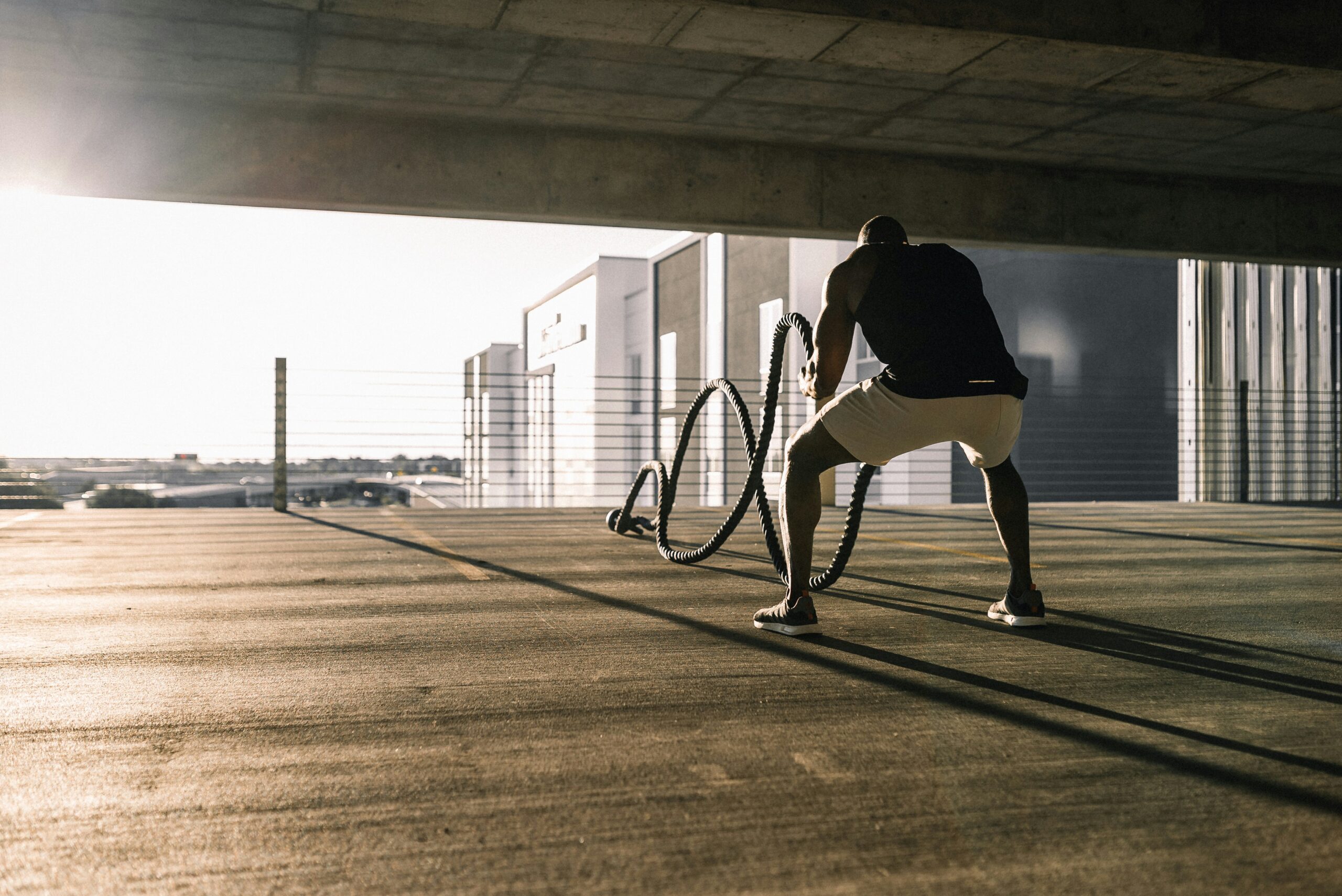
On the practical level, exercise is one of the most effective replacements for the time and the dopamine that pornography provided. A consistent exercise routine reduces cravings, provides structure to the day, and fills the unstructured time where relapse is most likely to occur. The evening workout that replaces the evening pornography habit serves double duty — supporting recovery physiologically while removing the opportunity for relapse.
What kind of exercise and how much
The type of exercise matters less than the consistency. A combination of cardiovascular exercise for circulation and dopamine support, and resistance training for testosterone and overall health, is ideal — but the most important factor is regularity. Three or four sessions a week, sustained over months, supports recovery far more than occasional intense bursts followed by long gaps.
Exercise is not a cure for PIED on its own — abstinence from pornography remains the fundamental requirement, and no amount of exercise compensates for continued pornography use. But as a support that accelerates recovery, reduces cravings, improves the physical foundation, and enhances the whole emotional and hormonal environment in which recovery happens, it is one of the most valuable things you can add to your recovery.
Putting It Together — The Fastest Real Path
If you want the fastest genuine recovery from PIED, the path is clear, even if it is not easy.
Stop pornography completely and do not relapse. Remove all artificial sexual stimulation, not just pornography itself. Support your body with consistent exercise, good sleep, and decent nutrition. Reintroduce real intimacy gradually and without performance pressure. Minimise alcohol and chronic stress. Track your progress using the real markers — morning erections, spontaneous arousal, response to real intimacy, returning sensitivity — and trust the trend over weeks rather than panicking over daily fluctuation. And be patient through the flatline and the non-linear stretches, because they are part of the process, not signs of failure.
Do these things consistently and your recovery will be as fast as it can be. The timeline varies by how long and how heavily you used — men with shorter, lighter histories often recover in weeks to a few months, while men with long, heavy histories may need six months to two years for full recovery. But the direction, for the man who commits fully, is reliably toward full recovery. PIED recovery done properly is not just possible but the expected outcome.
The fastest recovery starts the day you stop managing the symptom and start addressing the cause — and that day can be today.
Start Here
For the complete stage-by-stage roadmap, visit our PIED Recovery guide. To understand the full mechanism behind the condition, see our complete guide to PIED. And if you want one-on-one accountability and coaching from people who have navigated this from the inside, RiseNowRecovery.com provides the structured support that makes the difference between another stalled attempt and the recovery that finally holds.
You can recover from this. Start today.
This article is for informational purposes and is not a substitute for professional medical advice. If you are experiencing erectile dysfunction, consult a qualified healthcare professional to rule out physical causes. This is a sensitive topic — if you are struggling, support is available and recovery is possible.
Mozzie | iQuitPorn.com
Related reading:
- PIED Recovery — The Complete Roadmap from Day One to Full Healing
- PIED — The Complete Guide to Pornography-Induced Erectile Dysfunction
- What Is the Porn Flatline? How Long It Lasts and How to Survive It
- Is My ED Caused by Porn? How to Know If You Have PIED
- How to Stop Watching Porn — A Guide That Actually Works

Mozzie spent 20 years trapped in pornography addiction before finally breaking free. Having experienced firsthand the devastating effects of PIED, relationship breakdown, and the long road to recovery, he created iQuitPorn.com to give other men the honest, practical guidance he wished he had. Every article on this site is written from lived experience — not theory.



Leave a Reply