
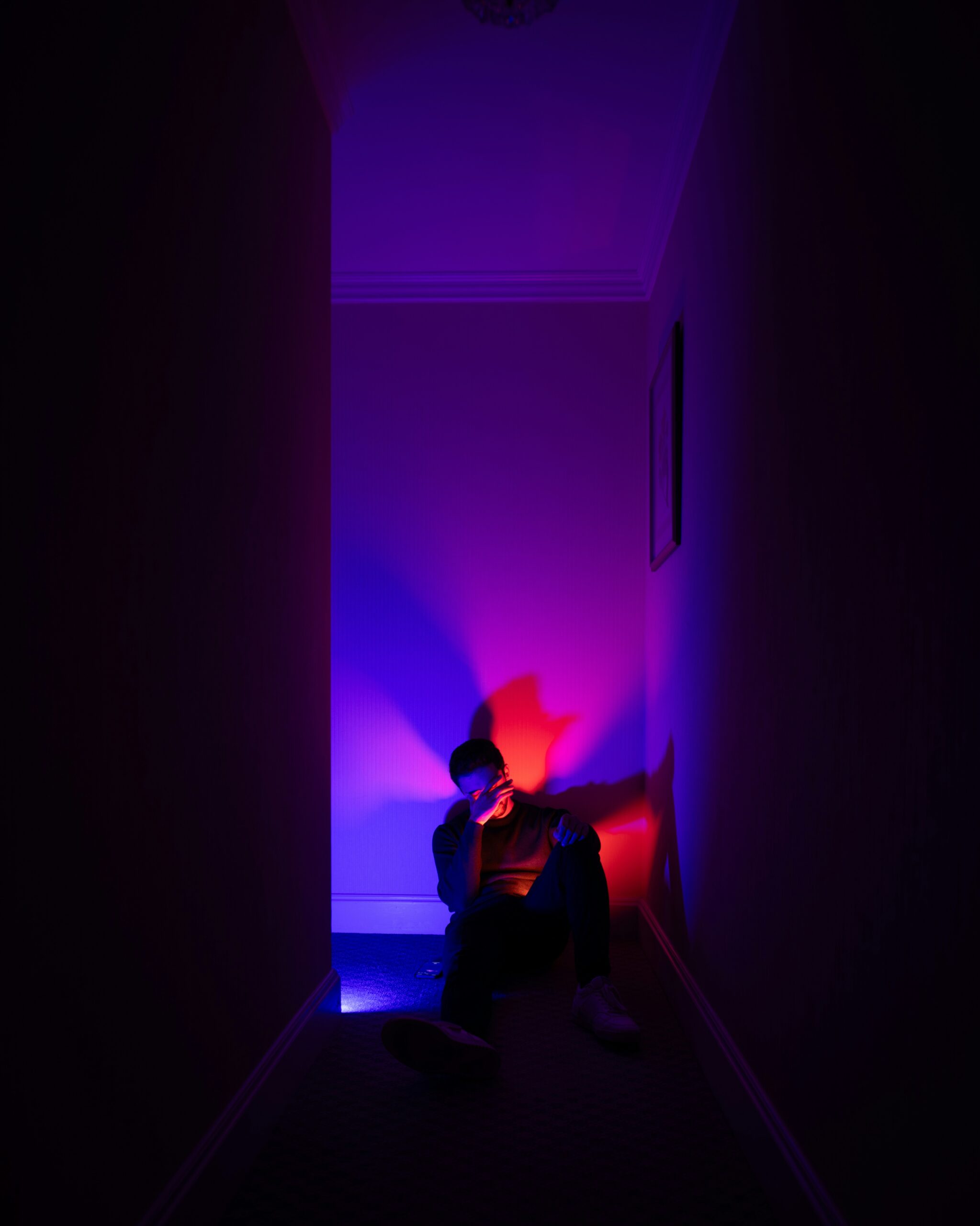
If you’ve quit porn before — maybe your longest streak was a month, maybe you’ve hit 90 days only to fall right back into it — you already know that quitting once isn’t the hard part. Staying stopped is the hard part. If you keep asking yourself “why do I keep relapsing on porn,” or you feel stuck in a porn quitting relapse cycle no matter how motivated you are, this is for you. And if you’re feeling discouraged, frustrated, or even ashamed about relapsing again, you’re not broken, and you’re not alone. Relapse is so common in recovery from compulsive porn use that it should almost be considered part of the process, not a sign that the process failed.
This post is about understanding why relapse happens — the psychological, neurological, and behavioral mechanics behind it — and then giving you a practical, honest framework for reducing the chances it happens again. No shame, no lectures, just a clear look at what’s actually going on in your brain and habits, and what tends to work. If you’re still at the stage of trying to quit in the first place, start with our guide on how to stop watching porn — then come back here.
Why Relapse Happens: It’s Not a Willpower Problem
Understanding the porn relapse causes behind your slips — and why willpower doesn’t stop porn relapse on its own — is the first step out of the cycle.
The most common mistake people make when trying to quit porn is treating it purely as a willpower issue. “I just need to be stronger.” “I just need more discipline.” When they inevitably slip up, they interpret it as a personal failing — proof that they’re weak, undisciplined, or somehow defective.
This framing is not only inaccurate, it’s actively counterproductive. Compulsive porn use, like other behavioral patterns involving the brain’s reward system, isn’t simply about willpower. It’s about a deeply ingrained habit loop that has been reinforced — sometimes for years, sometimes for over a decade — through repetition. Every time the behavior was repeated, neural pathways associated with that behavior were strengthened. The brain became efficient at executing this pattern, often automatically, in response to specific triggers.
When you “just try to stop,” you’re essentially trying to override years of neurological reinforcement using a single cognitive decision made in a calm moment. But relapse rarely happens in a calm moment. It happens in a moment of stress, boredom, loneliness, or unconscious autopilot — exactly the conditions under which the old habit loop is strongest and your prefrontal cortex (the part of your brain responsible for willpower and decision-making) is weakest.
Understanding this reframes the entire problem. You’re not failing a character test. You’re up against a deeply automated behavioral pattern that requires more than just “trying harder” to dismantle. The good news is that once you stop fighting willpower battles and start working with your brain instead, real change becomes possible — and the NoFap benefits that come with it are worth every bit of that work.
The Specific Reasons People Relapse
Let’s get concrete. Based on common patterns seen in recovery communities and behavioral research, here are the primary reasons people relapse — including after long streaks like 90 days.
1. The “I’ve Got This Now” Trap (Overconfidence After a Streak)
This is one of the most common reasons people experience porn relapse after 90 days specifically. Early in your streak, you’re hyper-vigilant. You’re avoiding triggers, you’re white-knuckling through urges, you’re constantly reminding yourself why you quit. But as days turn into weeks and weeks turn into months, something dangerous happens: you start to feel like you’ve “beaten” it.
This feeling of mastery is seductive — and it’s premature. Many people who relapse at the 60, 90, or even 180-day mark report the same thing: they let their guard down. They stopped using blockers, started believing they could handle being around triggers, and told themselves they weren’t addicted anymore and could probably watch something once and be fine.
That single thought — I could probably handle it now — is often the precise moment the relapse becomes inevitable. The brain doesn’t need much of an opening. One “test” of your willpower, one moment of curiosity dressed up as confidence, and the old pathway reactivates with surprising speed.
2. Unprocessed Emotional Triggers
Porn use, for most people who struggle with it compulsively, isn’t really about sex. It’s about emotional regulation. It’s a coping mechanism — a way to numb stress, escape boredom, soothe loneliness, distract from anxiety, or reward yourself after a hard day.
If you quit porn but don’t develop alternative ways to deal with these underlying emotional states, you haven’t actually solved the problem — you’ve just removed the tool you were using to cope, while the underlying need for coping remains. Eventually, life will throw a stressful day, a lonely night, a boring weekend, or a wave of anxiety at you. And if you have no other tool in your toolbox, your brain will reach for the one that worked for years: porn.
This is why so many people relapse during periods of high stress (exams, work deadlines, breakups, conflict with family) or during periods of extreme boredom (holidays, weekends with nothing planned, late nights alone). The trigger isn’t really “horniness” — it’s an unmet emotional need that porn used to fill. If porn has also been affecting your relationships, it’s worth reading about porn addiction and its impact on relationships — because the emotional disconnection it causes can itself become a relapse trigger.
3. The HALT Conditions: Hungry, Angry, Lonely, Tired
Borrowed from addiction recovery more broadly, the acronym HALT describes the four states in which people are most vulnerable to relapse: Hungry, Angry, Lonely, and Tired. These are states of depleted willpower and heightened emotional reactivity. When your prefrontal cortex is taxed — by lack of sleep, low blood sugar, unresolved anger, or social isolation — your ability to resist automatic urges drops dramatically.
If you notice that most of your relapses happen late at night, after a poor night’s sleep, after an argument, or during a stretch of social isolation, this is why. Your “willpower” isn’t a fixed resource; it fluctuates based on your physical and emotional state, and relapse often happens precisely when that resource is at its lowest.
4. Boredom and Idle Time
Boredom is one of the most underestimated relapse triggers. Many people associate relapse with stress or sadness, but in reality, an enormous number of relapses happen during unstructured, unoccupied time — lying in bed at night with your phone, a free afternoon with nothing planned, a long weekend with no obligations.
In these moments, the brain seeks stimulation. And after years of reinforcement, porn is one of the fastest, most reliable sources of dopamine your brain knows how to access. If you haven’t filled that void with something else — a hobby, exercise, social plans, creative projects — the void will pull you back toward the old pattern almost by default. If this sounds familiar, our guide on how to find new hobbies after quitting porn is a good place to start filling that gap.
5. Access and Environment
This sounds almost too simple, but it’s one of the most powerful factors: if the path of least resistance leads to porn, you will eventually take it during a moment of weakness. Having an unrestricted smartphone, an unblocked browser, private and unsupervised time, and no friction between impulse and access means that the only thing standing between you and relapse is willpower in a vulnerable moment — and as discussed, that’s an unreliable defense.
People who maintain long-term success overwhelmingly report that they made relapse inconvenient. They added friction: content blockers, accountability software, removing devices from the bedroom, restructuring their environment so that acting on the impulse required more effort and more steps — enough steps that the urge often passes before they get there.
6. Triggers You Haven’t Identified Yet
These are common porn relapse triggers that hide in plain sight. Many people think they know their triggers — stress, boredom, being alone — but there are often more specific and personal triggers that go unnoticed: certain apps, certain times of day, certain people or conversations, certain types of content (even non-explicit content that “primes” the brain), certain emotional states like rejection or low self-esteem, or even certain physical locations (a particular room, being in bed with a phone).
If you don’t take the time to actually map out your personal pattern — what happened in the hours and days before each relapse — you’ll keep getting blindsided by the same triggers because you never identified them as triggers in the first place.
7. The Abstinence Violation Effect
This is a critical psychological mechanism, and understanding it might be one of the most important things in this entire post. The “abstinence violation effect” describes what happens in your mind immediately after a single slip-up.
Here’s the pattern: you relapse once — maybe just for a few minutes, maybe you tell yourself it “doesn’t count” because it was brief. But then a wave of guilt, shame, and self-criticism hits. “I’ve ruined my streak.” “I’m back to square one.” “I’m such a failure, what’s even the point of trying.” And then — because you’ve already “failed” and the shame is overwhelming — you think, “well, I’ve already messed up, may as well keep going,” and what could have been a single, isolated slip turns into a multi-day or multi-week binge.
This is enormously important: the first slip is rarely what destroys progress. It’s the shame spiral and all-or-nothing thinking after the first slip that turns a minor setback into a full collapse. If you can interrupt this thought pattern — if you can experience a slip without spiraling into “I’ve failed completely, so why bother” — you dramatically reduce the damage any single relapse can do.
8. Treating “Quitting” as the Finish Line
A subtle but important issue: many people frame their goal as “get to day X” — 30 days, 90 days, a year — as if reaching that number is the finish line, after which the problem is solved and life goes back to normal. But recovery from a deeply ingrained habit isn’t a race with a finish line. It’s closer to an ongoing practice — like physical fitness, which doesn’t “complete” at some number of days, but requires continued attention.
When people treat a streak number as the goal itself, hitting that number can paradoxically trigger relapse (see point #1), because the “mission” feels accomplished and vigilance drops. A more sustainable framing is to think in terms of building a new normal — a new set of habits, coping mechanisms, and environmental structures — rather than reaching a number and then reverting to your old life.
How to Actually Avoid Relapse: A Practical Framework
If you’re looking for how to stop a porn relapse before it starts, and ultimately break the porn relapse cycle for good, the following framework — built around porn relapse prevention — is where to start. Understanding why relapse happens is only half the picture. Here’s what tends to actually work, based on the mechanisms described above.
Build Friction Into Your Environment
Don’t rely on willpower in the moment — set up your environment in advance so that acting on an urge requires effort, time, and multiple deliberate steps. This includes installing content-blocking software on all your devices (and giving the password to someone else, or using one that requires a delay to disable), removing your phone from your bedroom and using a separate alarm clock, using grayscale mode or app limits to reduce the “pull” of your phone in general, and being intentional about which devices you use in private versus shared spaces.
The goal isn’t to make relapse impossible — it’s to make it require enough effort and enough delay that the urge has time to pass before you act on it. Urges are often shorter-lived than they feel; most peak and subside within 15–30 minutes if you don’t act on them. This environmental work is also a core part of the rebooting process — if you’re dealing with PIED alongside this, the PIED recovery roadmap covers how these same principles apply to healing your sexual response.
Identify and Map Your Personal Triggers
Take time — ideally after every slip, but also proactively — to map out the specific chain of events that preceded the urge. Note the time of day, what you had just been doing, and what emotional state you were in. Were you alone? Had you just looked at your phone, scrolled social media, or seen specific content? Had something happened earlier that day that left you feeling rejected, bored, anxious, or low?
Over time, patterns emerge — maybe it’s always late at night after scrolling Instagram, after an argument with a specific person, or on weekends when you have no plans. Once you know your specific pattern, you can intervene before the urge even arises — by changing your evening routine, by having a plan for unstructured weekend time, by having a script for how you’ll handle conflict with that person.
Develop Real Alternatives for Emotional Regulation
Since porn often functions as a coping mechanism for stress, boredom, loneliness, or low mood, simply removing it without replacing its function leaves a gap that will eventually get filled — often by relapse. Build a toolkit of alternatives that you can turn to instead: physical exercise (even a short walk can shift your mood and break a craving), calling or texting a friend, a hobby that genuinely absorbs your attention (something hands-on tends to work better than passive consumption), journaling — especially writing through what you’re actually feeling in the moment, breathing exercises or short meditation to ride out an urge, and cold exposure (a cold shower) for an immediate physiological reset during an intense urge. For a deeper dive into this, see what to replace porn with — the honest answer.
The specific tool matters less than having something ready. The worst position to be in is having an urge hit and having no plan — because in that moment, the old pathway is the only “plan” your brain has readily available.
Watch for HALT Conditions
Pay attention to your basic physical and emotional state. If you notice you’re hungry, angry, lonely, or tired, recognize that this is a higher-risk window — not because anything is wrong with you, but because your capacity for self-regulation is genuinely lower in these states. Addressing the underlying condition (eating something, resolving a conflict, reaching out to someone, getting sleep) often resolves the urge indirectly, because the urge was never really “about” porn in the first place.
Plan for Boredom and Unstructured Time
Look ahead at your week and identify the times you’re most likely to have unstructured, idle time — evenings, weekends, days off. Rather than leaving these open (which your brain will fill by default with the easiest available stimulation), put something in that slot in advance: a workout, a social plan, a project, a walk, a class, anything that gives the time structure and a different source of engagement.
Reframe Streaks: Progress, Not a Test
Try to shift your internal framing away from “I am being tested, and if I fail the test, I’ve ruined everything” toward “I am building new patterns, and each day reinforces them a little more.” This isn’t just a feel-good reframe — it has a direct practical effect on the abstinence violation effect described earlier. If a slip happens and you interpret it as “I failed completely, the streak is ruined, what’s the point,” you’re far more likely to spiral into a longer relapse. If instead you interpret it as “that’s one moment, and I’m continuing the work I’ve been doing,” the slip stays contained.
This doesn’t mean treating relapse casually or making excuses — it means decoupling your sense of overall progress from any single day’s outcome, so a setback doesn’t become a collapse.
Have a “Day 1 After a Slip” Plan in Advance
Knowing what to do after a porn relapse, before it even happens, is one of the most useful things you can do. Decide right now, before it happens, exactly what you’ll do if you slip up. Write it down. Something like: “If I slip, I will not view it as starting over from zero — I will note what triggered it, I will not isolate or hide it, I will tell my accountability partner within 24 hours, and I will go straight back to my routines the next day without an extended ‘one more time’ binge.”
Having this plan ready before a slip happens means that, in the disorienting and shame-filled moments right after a relapse, you’re not making decisions from scratch while your judgment is compromised — you’re just executing a plan you made when you were thinking clearly.
Stay Alert After Long Streaks — Especially Around 60–90+ Days
Given how often relapse happens specifically because of overconfidence after a long streak, treat milestones with some caution. This is also often around the time people are navigating the porn flatline, which can itself create discouragement that feeds back into relapse risk. If anything, the period right after hitting 30, 60, or 90 days is a higher-risk period for complacency, not a lower-risk one. This is the moment to keep your blockers in place, keep your accountability check-ins going, and resist any thought along the lines of “I’ve got this now, I could probably handle being around it.” That thought, more than almost anything else, is the warning sign of an approaching relapse.
Get Accountability — A Real Person, Not Just an App
Software blockers help with friction, but they’re relatively easy to disable alone, in private, in a moment of rationalization. Real accountability — a friend, partner, support group, or therapist who you check in with regularly and who knows what you’re working on — adds a social dimension that’s much harder to override in the moment. Knowing you’ll have to tell someone changes the calculus of a decision made at 1 a.m.
Online communities focused on this specific issue can also be valuable, especially for normalizing the experience — seeing that other people have the exact same struggles, the exact same relapse patterns, and the exact same feelings of shame, can reduce the isolation that often fuels the cycle.
Consider Professional Support If the Pattern Persists
If you’ve tried these strategies repeatedly and find yourself stuck in a cycle that feels genuinely compulsive — interfering with relationships, work, sleep, or your sense of self — it can be worth talking to a therapist, ideally one with experience in compulsive sexual behavior or behavioral addictions. If you’re wondering whether you can do this alone, our post on whether you can quit porn cold turkey or need help and our complete guide to counseling for porn addiction both walk through how to think about this decision. There’s nothing unusual or shameful about needing outside support for a pattern that’s deeply ingrained; in fact, recognizing when self-directed strategies aren’t enough is itself a form of progress.
Putting It All Together
Relapse after quitting porn — whether after one month or after 90 days — isn’t a sign of weak character or a uniquely personal failure. It’s the predictable result of a deeply reinforced habit loop colliding with unaddressed emotional needs, environmental ease of access, and (especially after a long streak) overconfidence. Each of these factors is something you can actually work with directly: reduce access and add friction, identify your specific triggers, build real alternatives for emotional regulation, watch for HALT conditions and unstructured time, and — critically — have a plan for handling a slip without letting shame turn it into a collapse.
The goal isn’t to never struggle again. The goal is to build a life and a set of habits where, when an urge does come — and it will, at some point — you have systems, plans, and support in place that make it far less likely to turn into a full relapse, and far less damaging if it does. That’s not a one-time fix. It’s an ongoing practice. But it’s one that gets easier with consistency, and one where every rep — every urge you navigate, every trigger you identify, every slip you handle without spiraling — genuinely counts, even if it doesn’t feel like it in the moment.
If you’re ready to take the next step beyond self-directed strategies, RiseNow Recovery offers structured support for men working to break free from compulsive porn use and rebuild their lives.
A note: if you’re dealing with compulsive sexual behavior that’s significantly affecting your life, relationships, or mental health, consider speaking with a licensed therapist who specializes in this area, or explore options like RiseNow Recovery. You don’t have to figure this out entirely on your own.

Mozzie spent 20 years trapped in pornography addiction before finally breaking free. Having experienced firsthand the devastating effects of PIED, relationship breakdown, and the long road to recovery, he created iQuitPorn.com to give other men the honest, practical guidance he wished he had. Every article on this site is written from lived experience — not theory.



Leave a Reply